Machine Learning Fundamentals
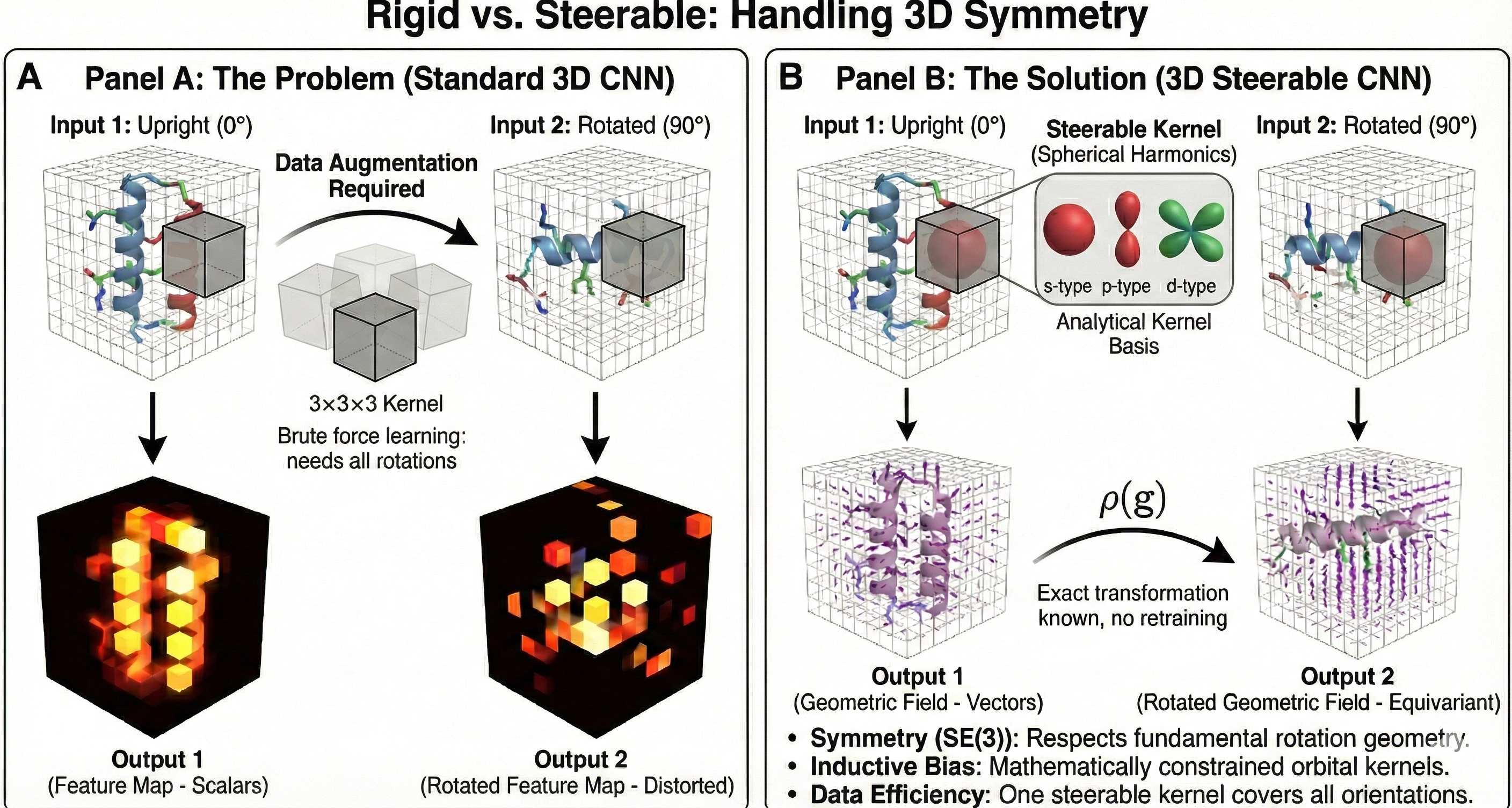
Comparison of standard 3D CNN versus 3D Steerable CNN for handling rotational symmetry

3D Steerable CNNs: Rotationally Equivariant Features

Weiler et al.’s NeurIPS 2018 paper introducing 3D Steerable CNNs that achieve SE(3) equivariance through group representation theory and spherical harmonic convolution kernels, eliminating the need for rotational data augmentation and improving data efficiency for scientific applications with rotational symmetry like molecular and protein structures.

Machine Learning Fundamentals
Vintage slot machine with multiple arms representing the multi-arm bandit problem in machine learning

5 Axes of Multi-Arm Bandit Problems: A Practical Guide

Key dimensions that have helped me understand multi-arm bandit problems: action space, problem structure, external information, reward mechanism, and learner feedback.

Machine Learning Fundamentals
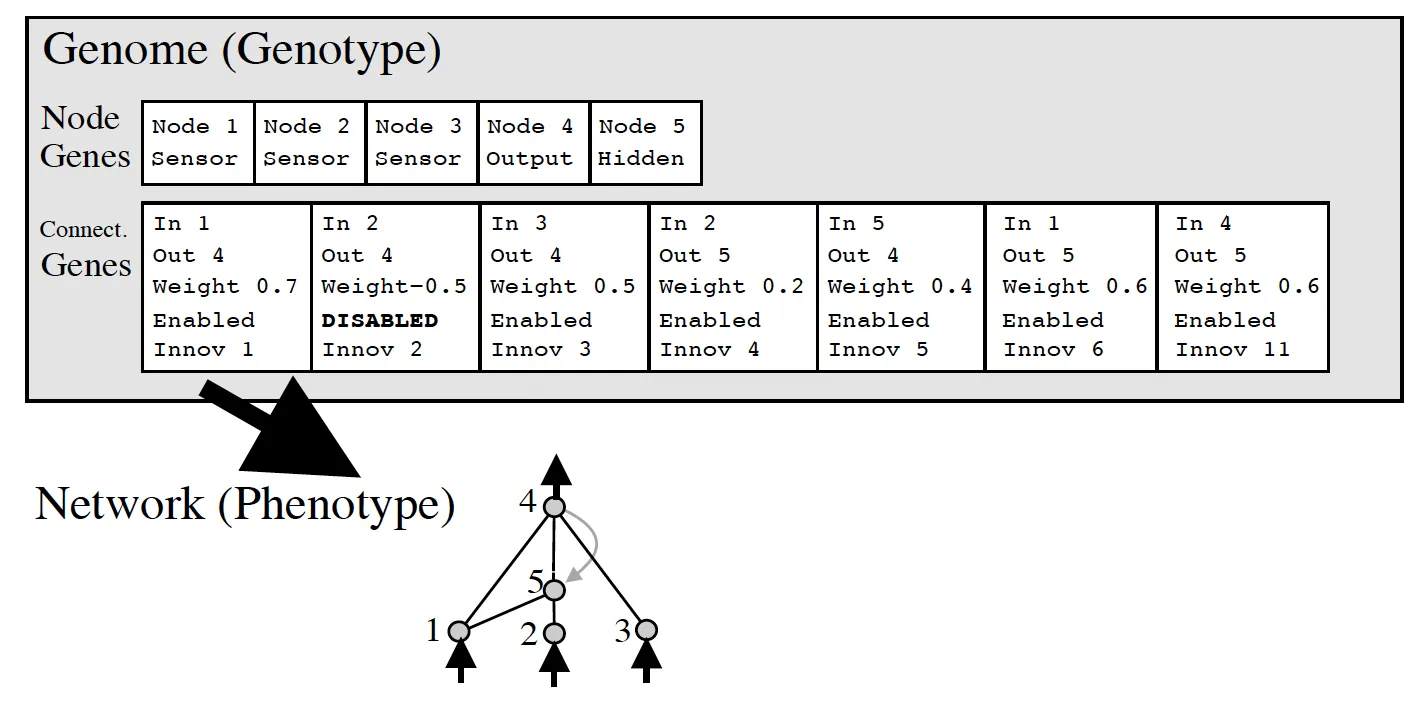
NEAT genome encoding diagram showing node genes and connection genes with innovation numbers

A Guide to Neuroevolution: NEAT and HyperNEAT

Discover how NEAT and HyperNEAT changed neuroevolution by automatically designing neural network architectures and scaling them through geometric patterns.

Machine Learning Fundamentals
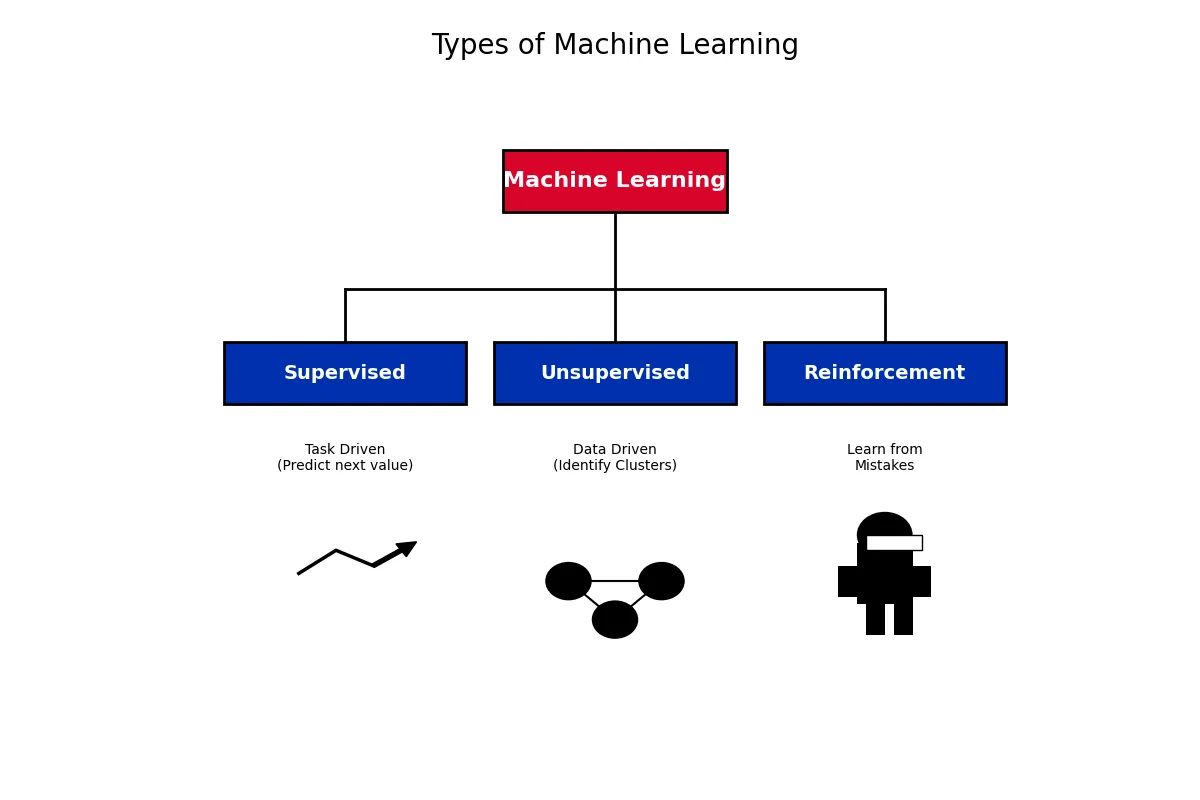
Diagram showing the three main types of machine learning: supervised, unsupervised, and reinforcement learning

Breaking Down Machine Learning for the Average Person

Understand the pattern recognition behind Netflix recommendations, email spam filters, and game-playing AI through three core machine learning approaches.

Machine Learning Fundamentals
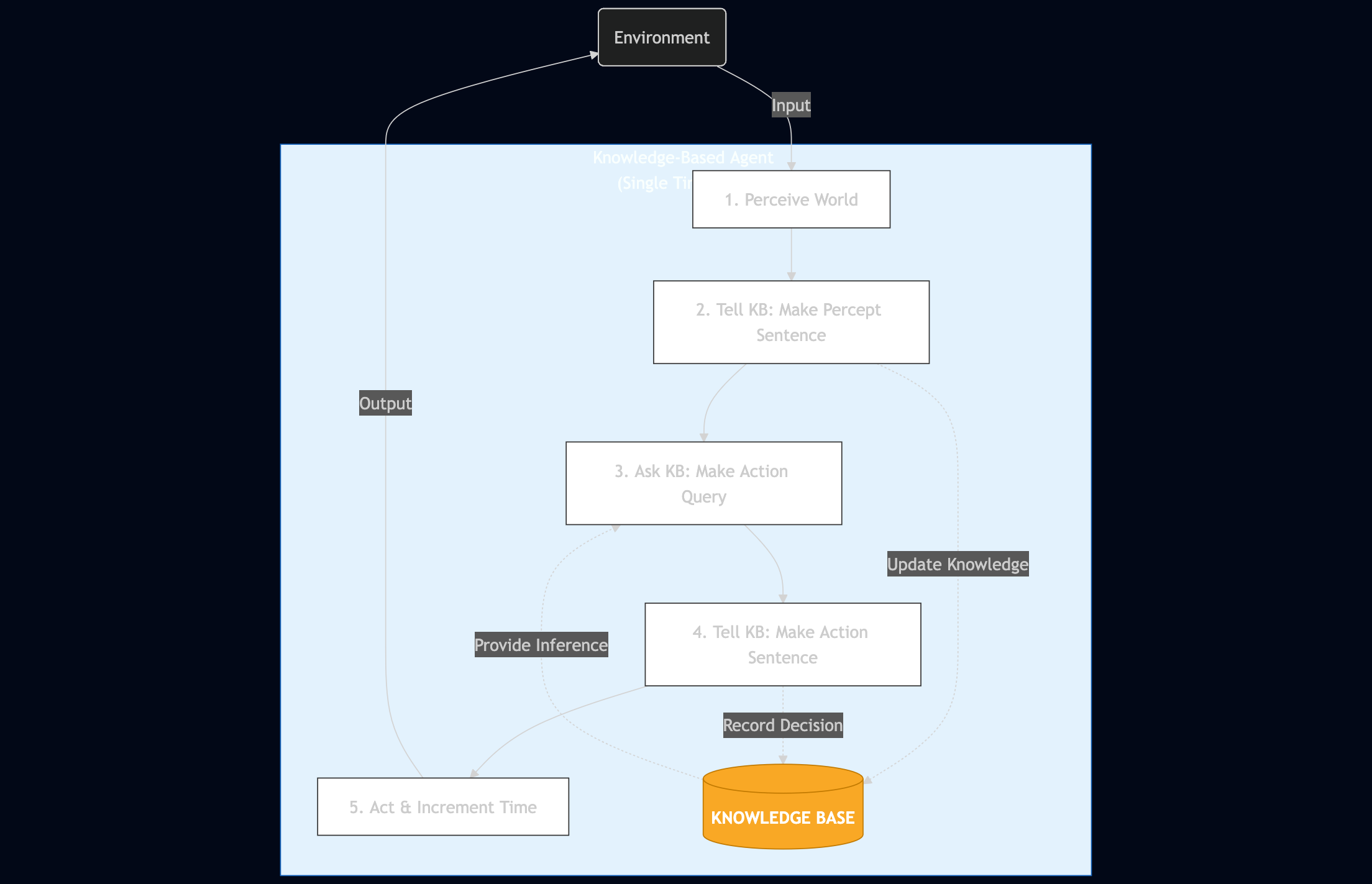
Diagram illustrating knowledge-based agent architecture with knowledge base, reasoning, and action components

Foundations of AI: Knowledge-Based Agents and Logic

Explore the building blocks of classic AI reasoning, from knowledge bases and logic to how systems draw new conclusions from existing knowledge.