Generative Modeling
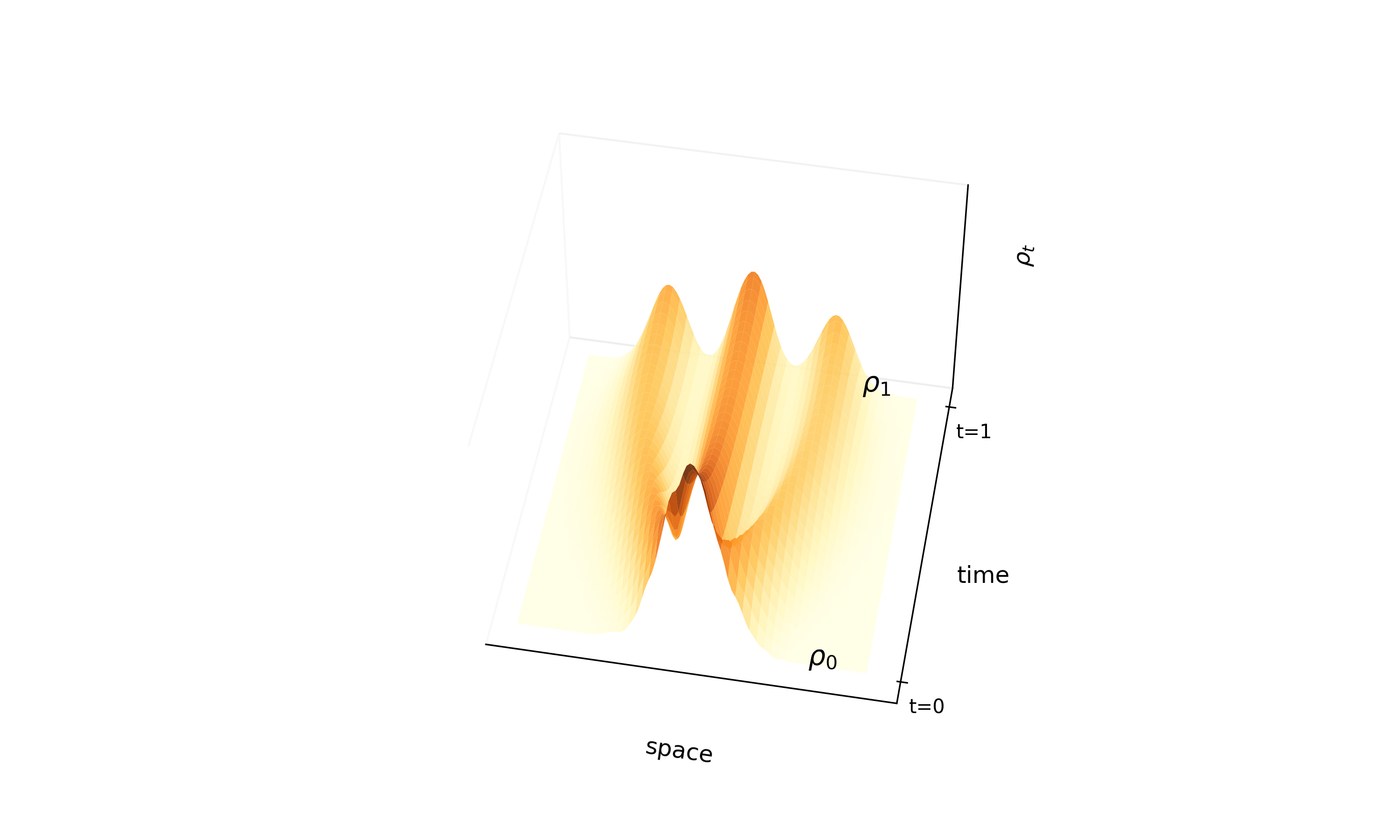
Visualization of probability density flow from initial distribution ρ₀ to target distribution ρ₁ over time through space

Building Normalizing Flows with Stochastic Interpolants

Proposes ‘InterFlow’, a method to learn continuous normalizing flows between arbitrary densities using stochastic interpolants. It avoids ODE backpropagation by minimizing a quadratic objective on the velocity field, enabling scalable ODE-based generation.

Generative Modeling
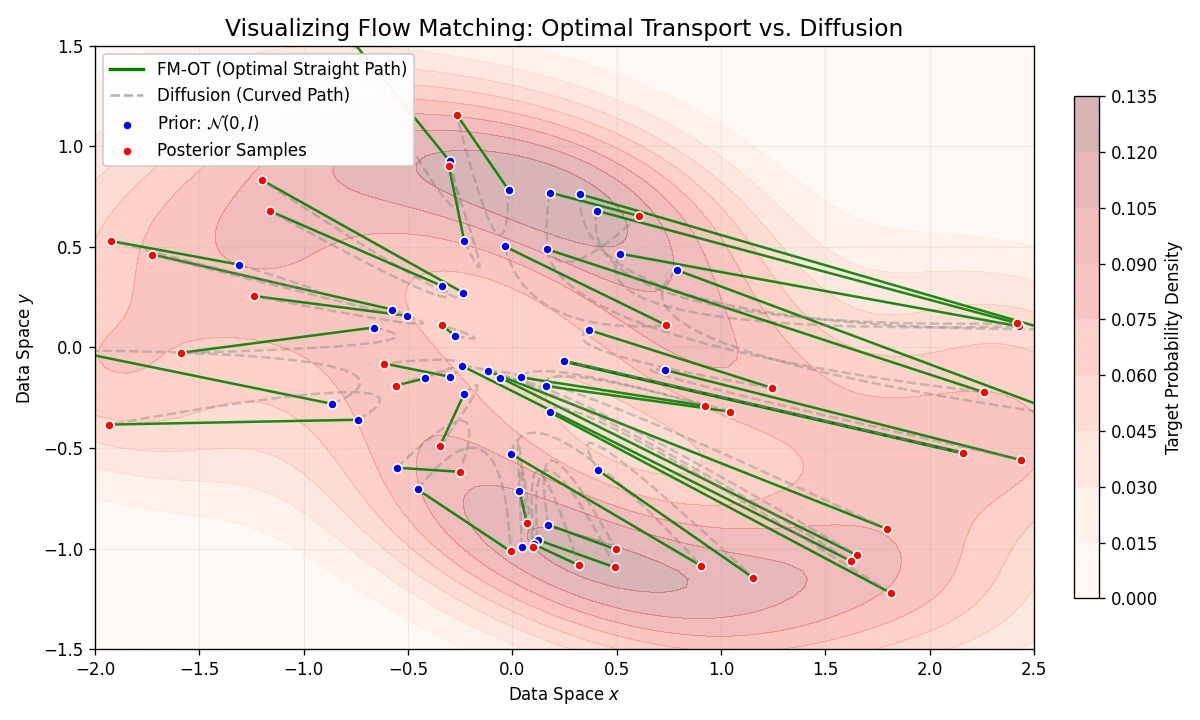
Visualization comparing Optimal Transport (straight paths) vs Diffusion (curved paths) for Flow Matching

Flow Matching for Generative Modeling: Scalable CNFs

Introduces Flow Matching, a scalable method for training CNFs by regressing vector fields of conditional probability paths. It generalizes diffusion and enables Optimal Transport paths for straighter, more efficient sampling.

Generative Modeling
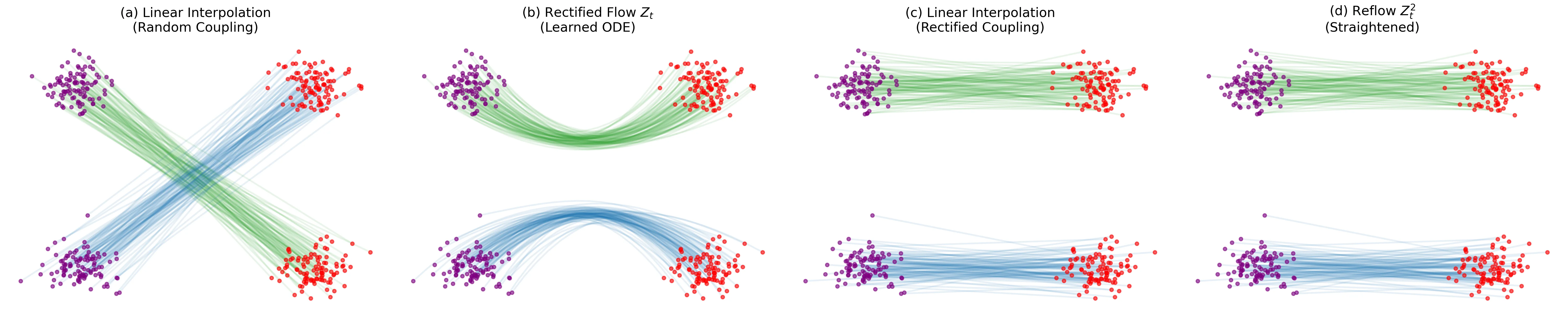
Visualization showing linear interpolation, learned ODE trajectories, and the reflow straightening process for rectified flow

Rectified Flow: Learning to Generate and Transfer Data

Introduces ‘Rectified Flow,’ a method to transport distributions via ODEs with straight paths. Uses a ‘reflow’ procedure to iteratively straighten trajectories, enabling high-quality 1-step generation without complex distillation pipelines.

Generative Modeling
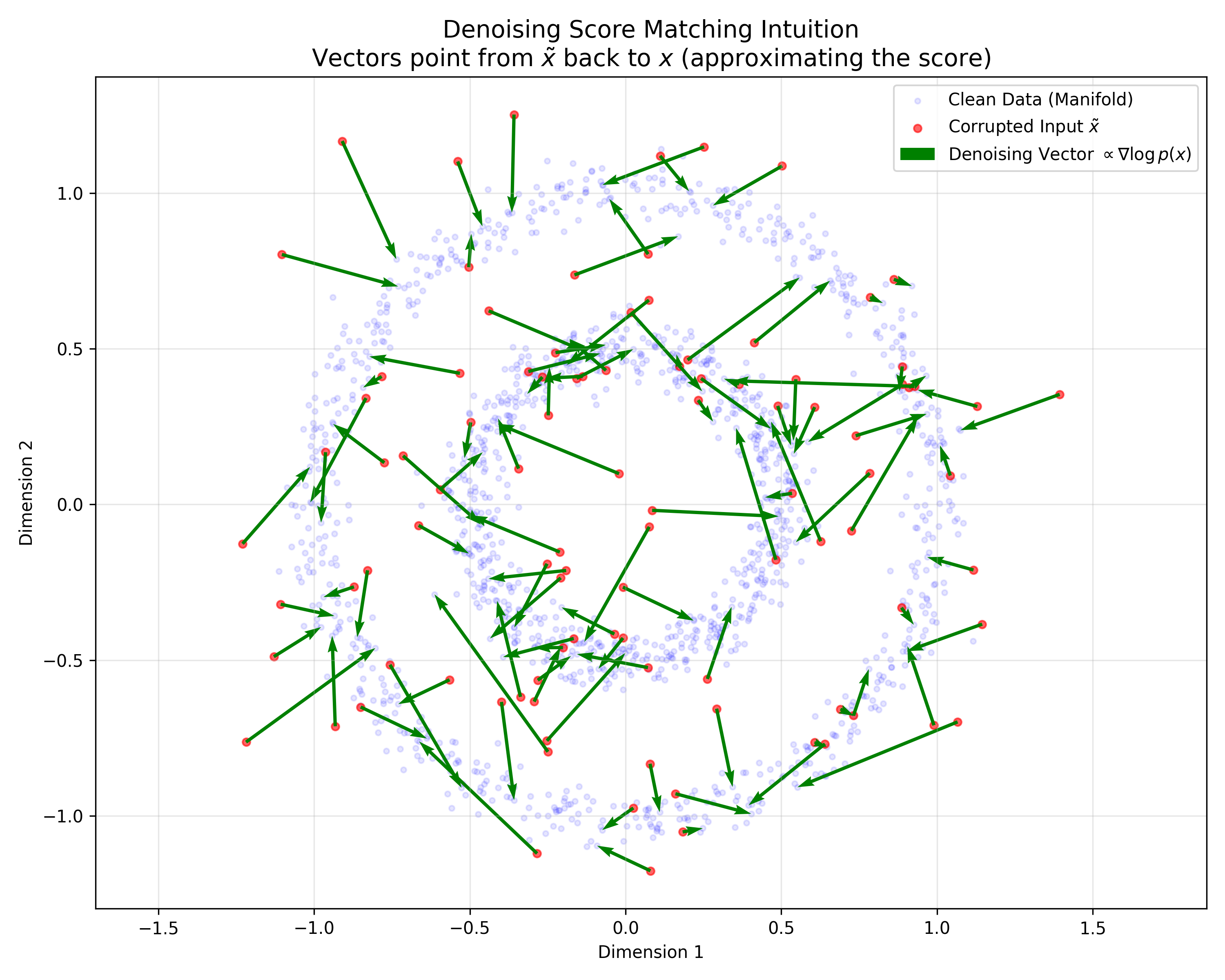
Denoising Score Matching Intuition - Vectors point from corrupted samples back to clean data, approximating the score

Score Matching and Denoising Autoencoders

This paper provides a rigorous probabilistic foundation for Denoising Autoencoders by proving they are mathematically equivalent to Score Matching on a kernel-smoothed data distribution. It derives a specific energy function for DAEs and justifies the use of tied weights.

Generative Modeling
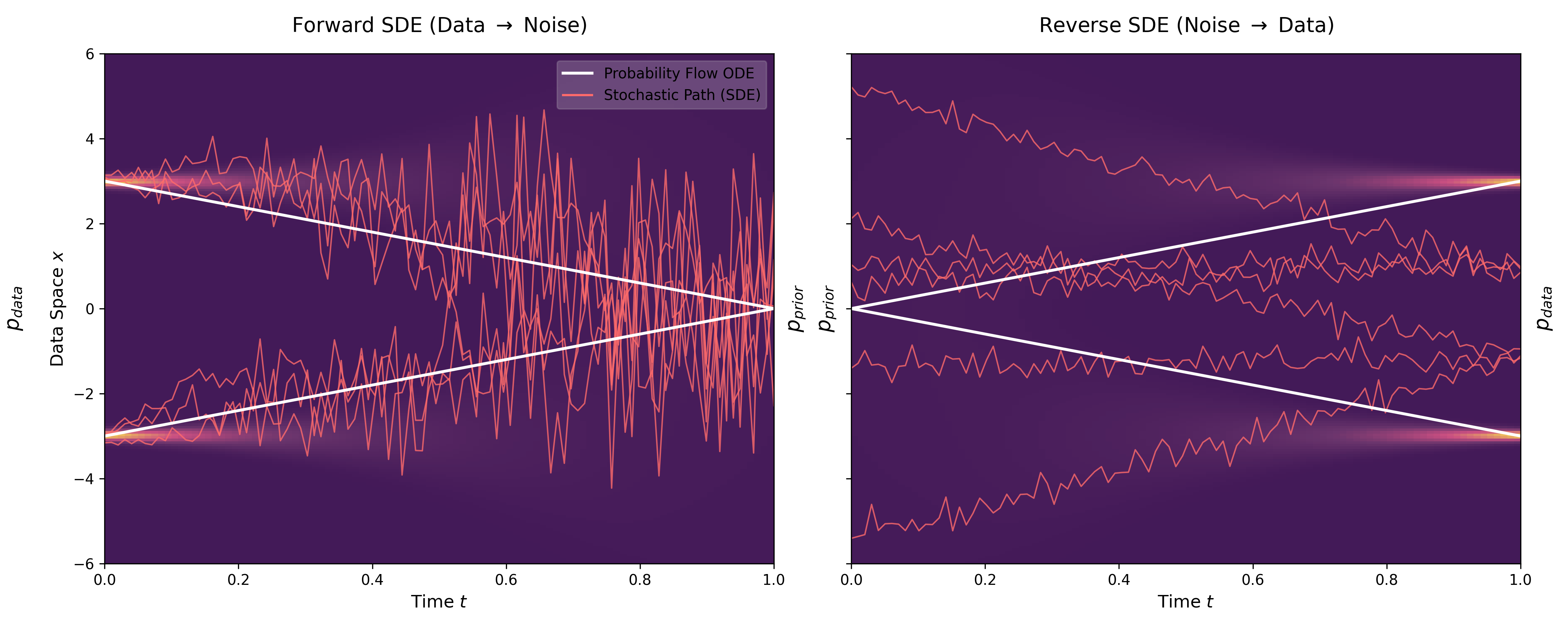
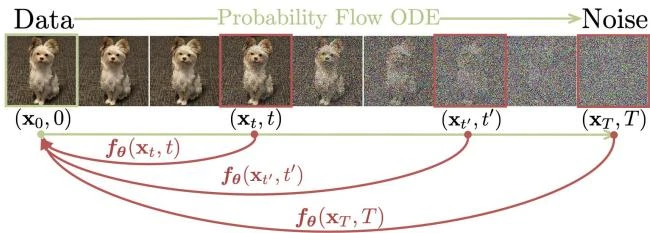
Forward and Reverse SDE trajectories showing the diffusion process from data to noise and back

Score-Based Generative Modeling with SDEs

This paper unifies previous score-based methods (SMLD and DDPM) under a continuous-time SDE framework. It introduces Predictor-Corrector samplers for improved generation and Probability Flow ODEs for exact likelihood computation, setting new records on CIFAR-10.

Generative Modeling
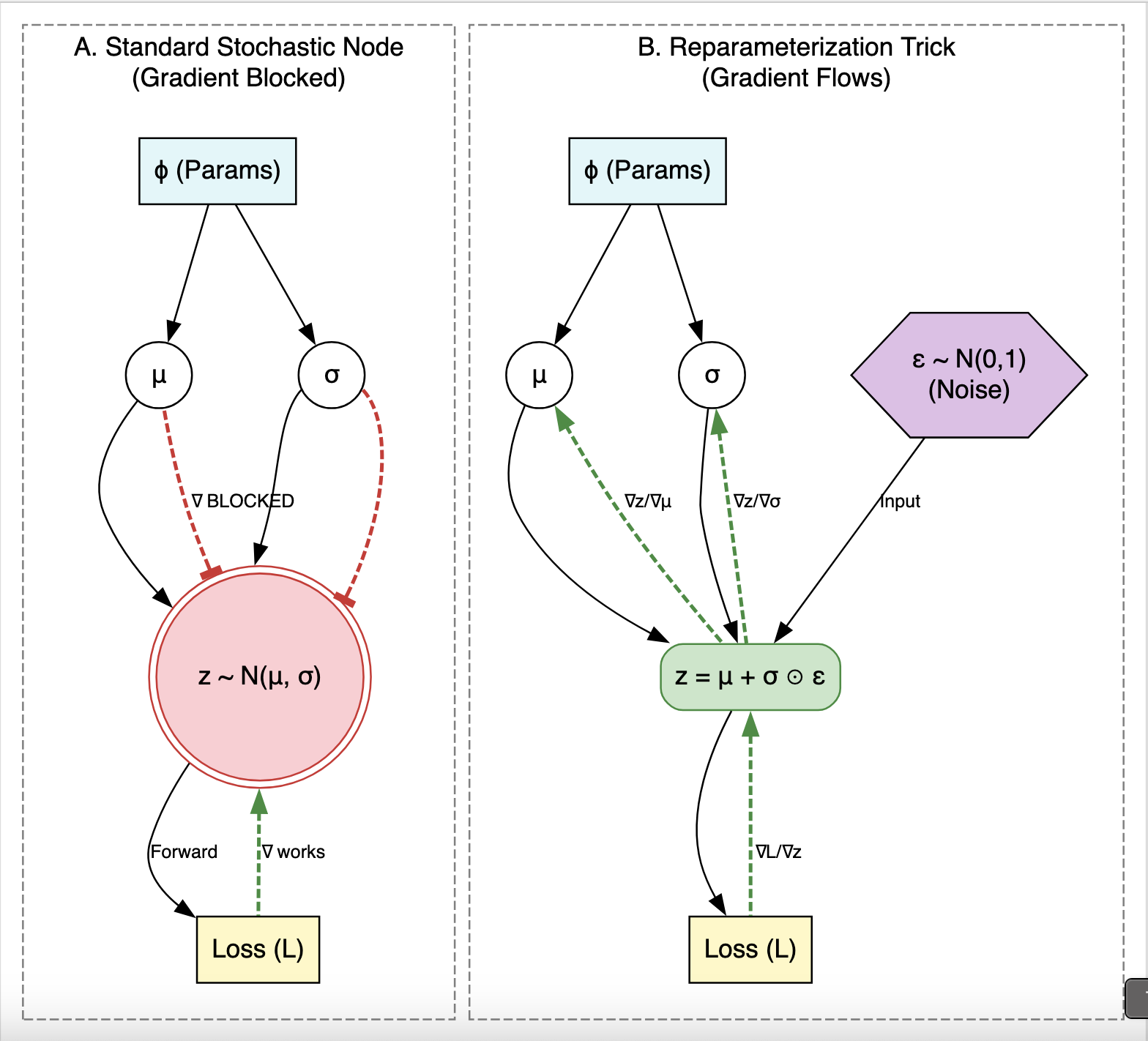
Diagram comparing standard stochastic sampling (gradient blocked) vs the reparameterization trick (gradient flows)

Auto-Encoding Variational Bayes: VAE Paper Summary

Kingma and Welling’s foundational 2013 paper introducing Variational Autoencoders and the reparameterization trick, enabling end-to-end gradient-based training of generative models with continuous latent variables by making the sampling operation differentiable through a clever mathematical transformation.

Generative Modeling
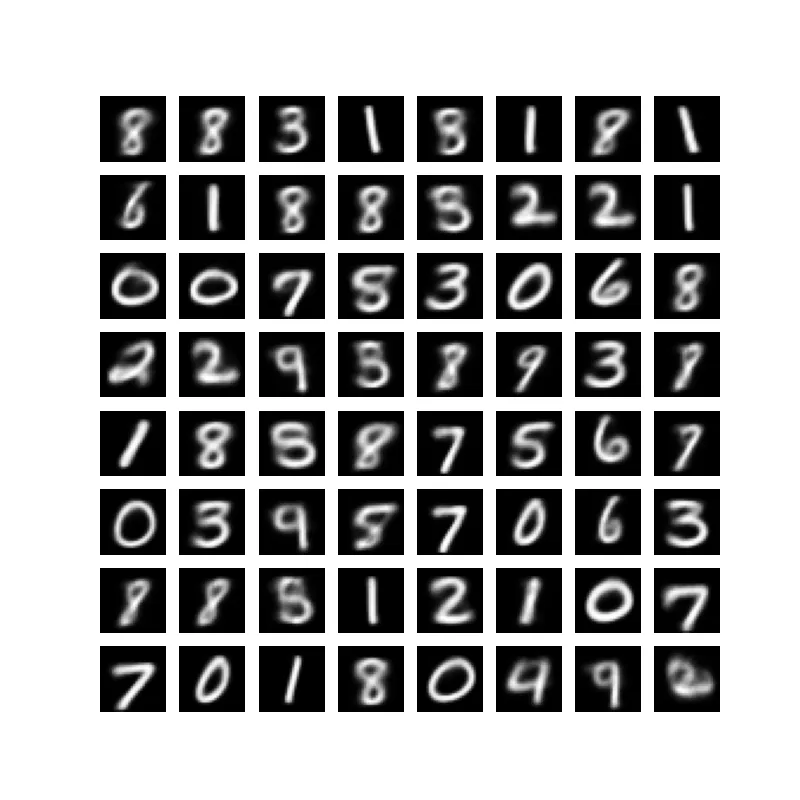
MNIST digit samples generated from a Variational Autoencoder latent space

Importance Weighted Autoencoders: Beyond the Standard VAE

Discover how Importance Weighted Autoencoders (IWAEs) use the same architecture as VAEs with a fundamentally more powerful objective to leverage multiple samples effectively.

Generative Modeling
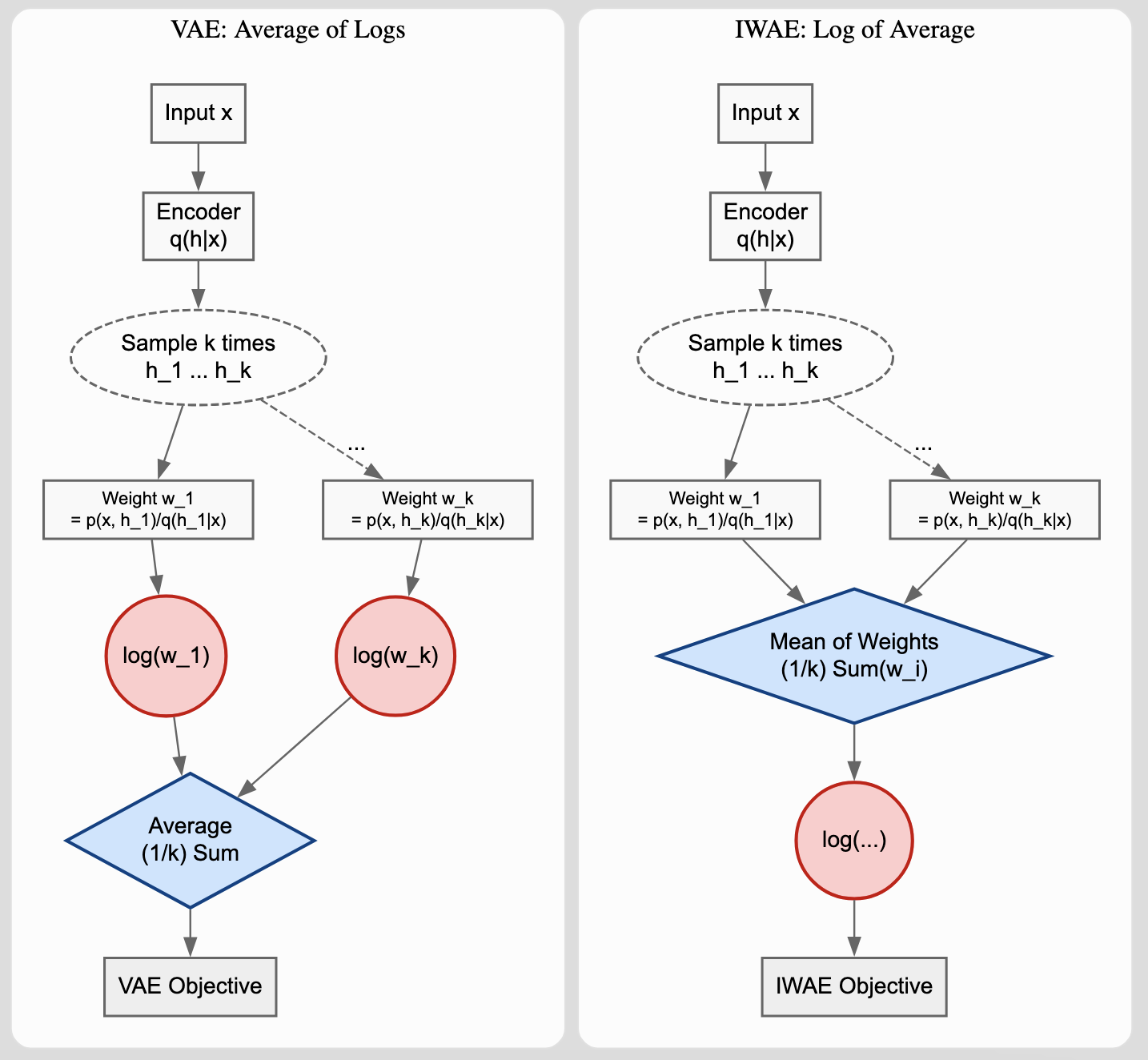
Flowchart comparing VAE and IWAE computation showing the key difference in where averaging occurs relative to the log operation

IWAE: Importance Weighted Autoencoders

Burda et al.’s ICLR 2016 paper introducing Importance Weighted Autoencoders, which use importance sampling to derive a strictly tighter log-likelihood lower bound than standard VAEs, addressing posterior collapse and improving generative quality. The model architecture remains the same.

Generative Modeling
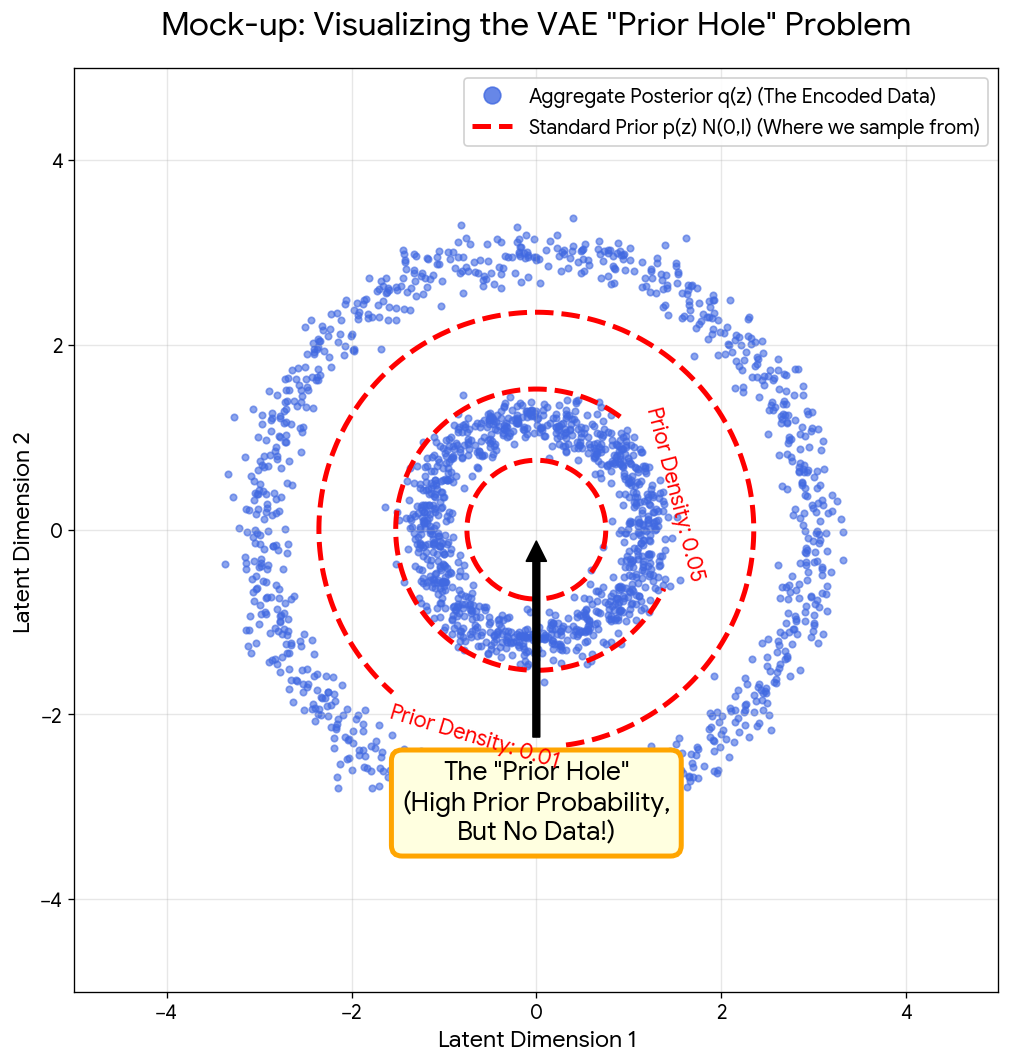
Visualization of the VAE prior hole problem showing a ring-shaped aggregate posterior with an empty center where the Gaussian prior has highest density

Contrastive Learning for Variational Autoencoder Priors

A NeurIPS 2021 method paper introducing Noise Contrastive Priors to address the VAE ‘prior hole’ problem, where standard Gaussian priors assign high density to regions of latent space that don’t correspond to realistic data, using energy-based models trained with contrastive learning to match the aggregate posterior.

Generative Modeling
Variational Autoencoder architecture diagram showing encoder, latent space, and decoder

Modern PyTorch VAEs: A Detailed Implementation Guide

A complete guide to implementing modern Variational Autoencoders in PyTorch. Includes a copy-pasteable implementation, explanation of KL annealing to fix posterior collapse, and a deep dive into stable standard deviation parameterizations.

Generative Modeling
Illustration of GAN training process showing adversarial competition between generator and discriminator

Understanding GANs: From Fundamentals to Objective Functions

An in-depth guide to GANs: how two neural networks compete to generate realistic data, the math behind it, and the evolution of objective functions that stabilize training.