Computational Social Science
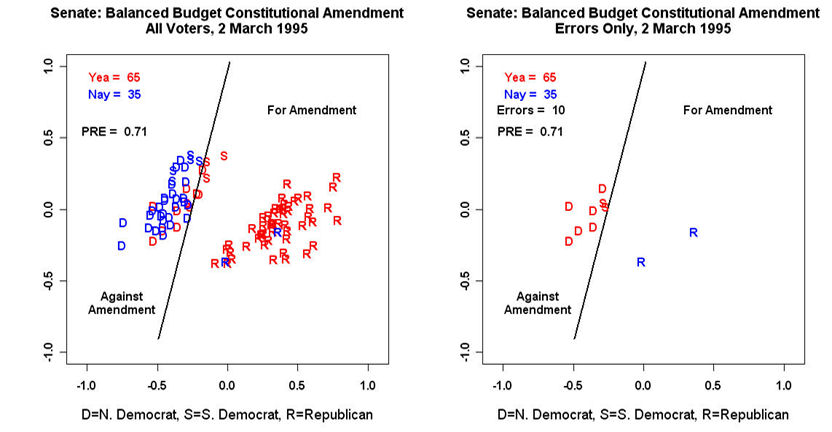
NOMINATE spatial plot showing Senate vote on Balanced Budget Amendment (1995) with legislators positioned on liberal-conservative dimension

A Spatial Model for Legislative Roll Call Analysis

This paper introduces NOMINATE, a probabilistic spatial model that recovers metric coordinates for legislators and roll calls from nominal voting data, demonstrating that a single liberal-conservative dimension explains the vast majority of Congressional voting behavior.
Computational Social Science
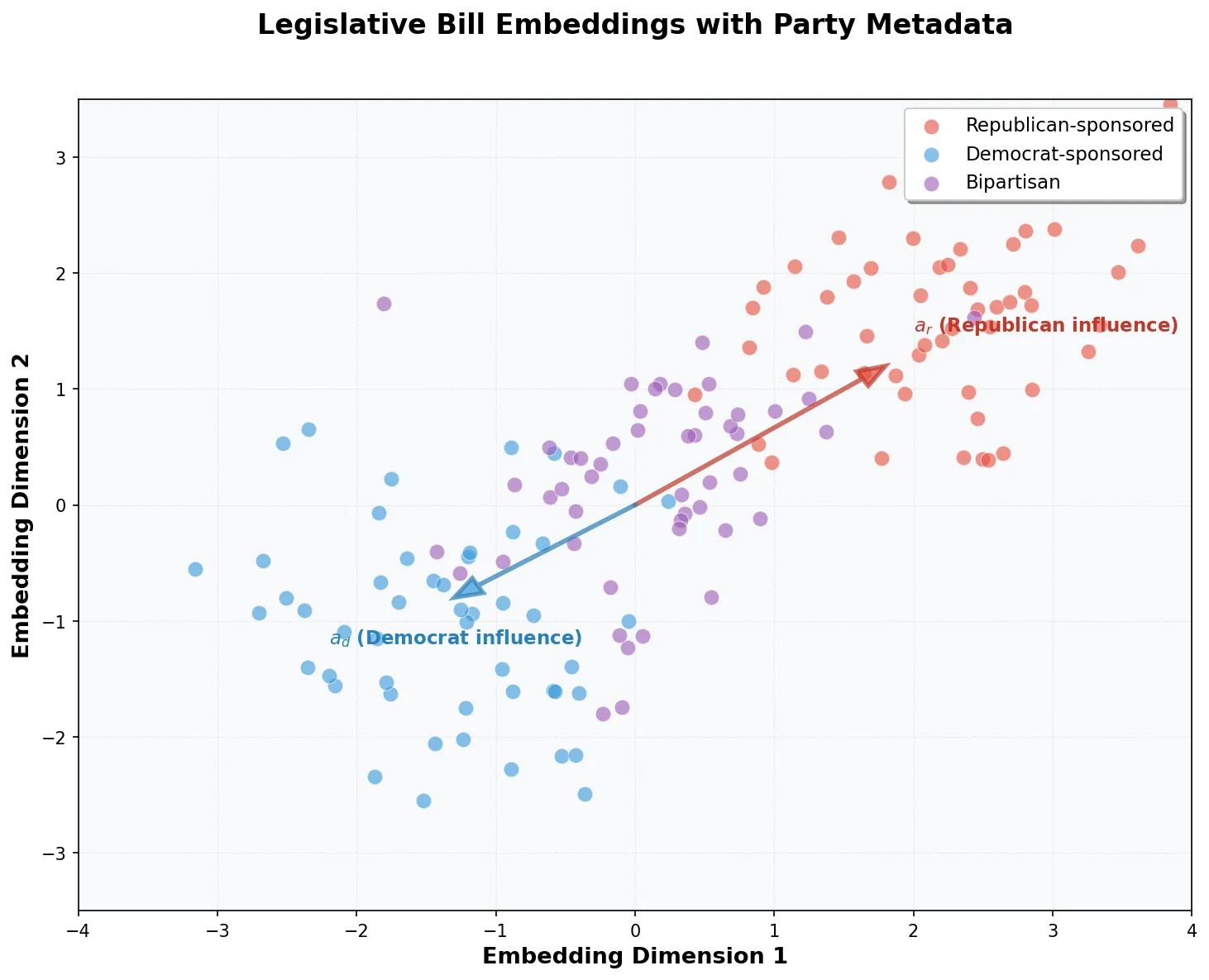
Visualization of party-based legislative embeddings

Party Matters: Enhancing Legislative Embeddings

This paper introduces a neural architecture that combines bill text embeddings (CNN/MWE) with sponsor ideology metadata to improve vote prediction accuracy, particularly in out-of-session contexts where political dynamics shift.

Computational Social Science
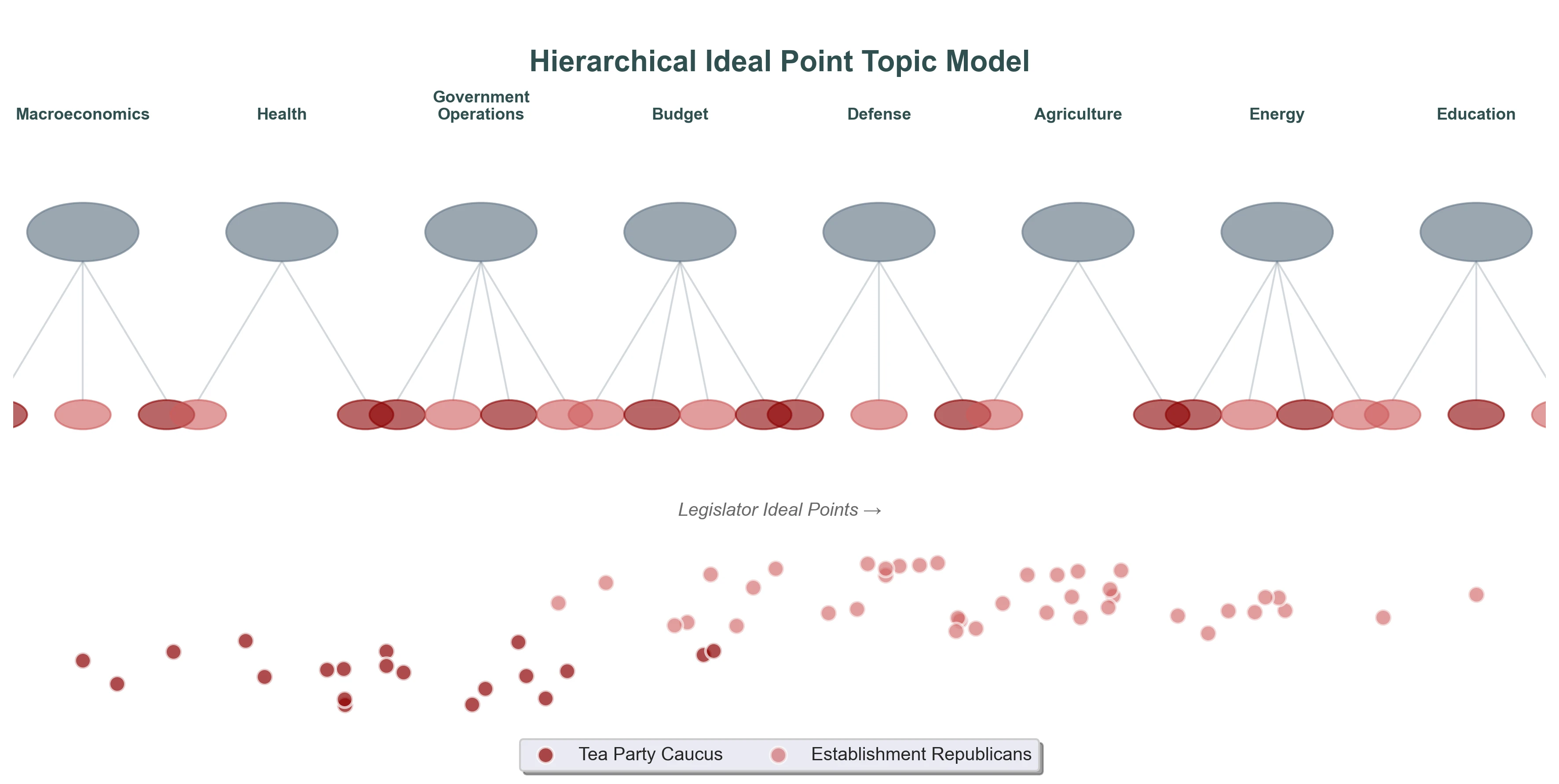
Hierarchical Ideal Point Topic Model visualization showing political polarization

Tea Party in the House: Legislative Ideology via HIPTM

This paper introduces the Hierarchical Ideal Point Topic Model (HIPTM) to analyze the 112th U.S. Congress. By jointly modeling votes and text, it uncovers how Tea Party Republicans and establishment Republicans differ in both voting records and how they frame specific policy issues.

Computational Social Science
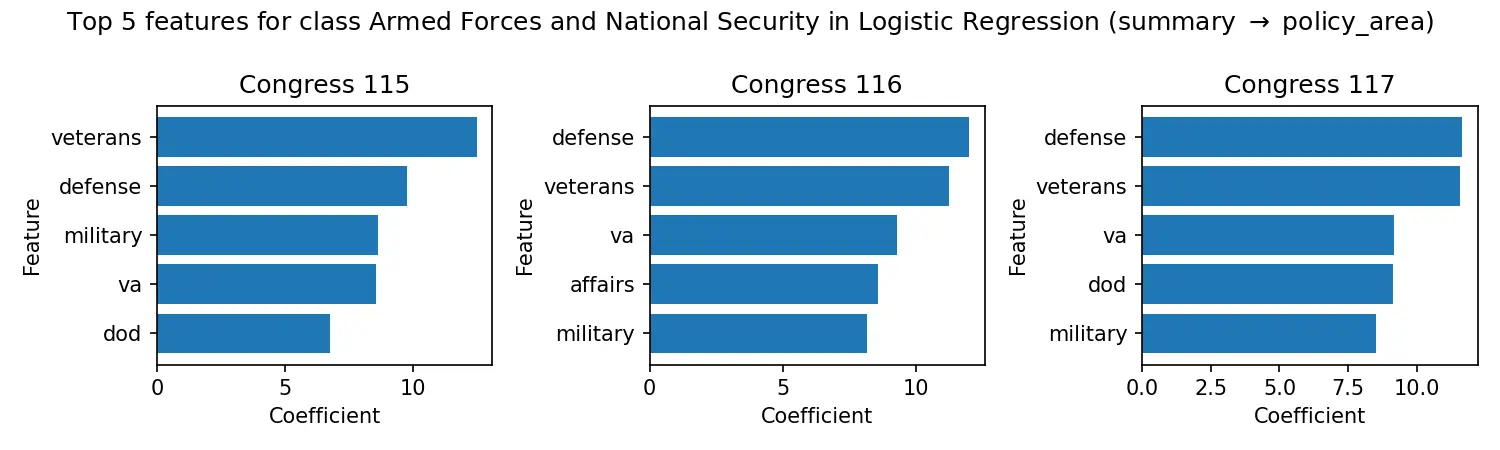
Top features for Armed Forces and National Security policy classification showing veterans, defense, military keywords

Classifying Congressional Bills with Machine Learning

We test three ML models on 48K congressional bills to see how well they can predict policy areas from bill text. Results show logistic regression achieves 89% F1 score.

Computational Social Science
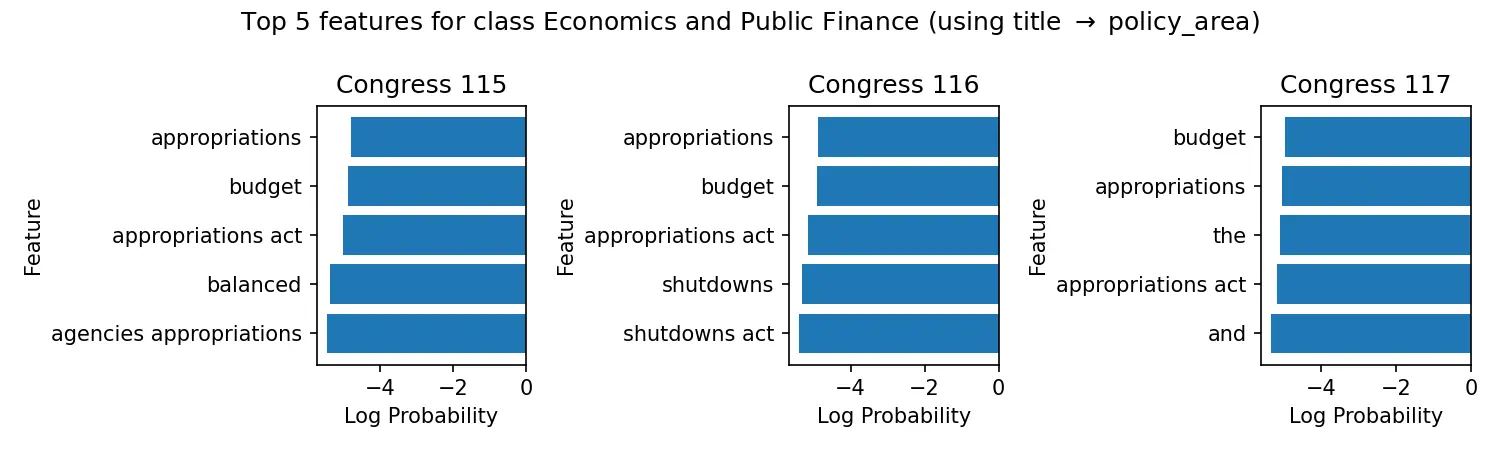
Top features for Economics and Public Finance policy classification across Congresses

How Does Congress Actually Work? Data from 15K Bills

Only 2% of congressional bills become law. We analyze 15K bills from 2021-2023 to understand what drives legislative success and failure.

Computational Social Science
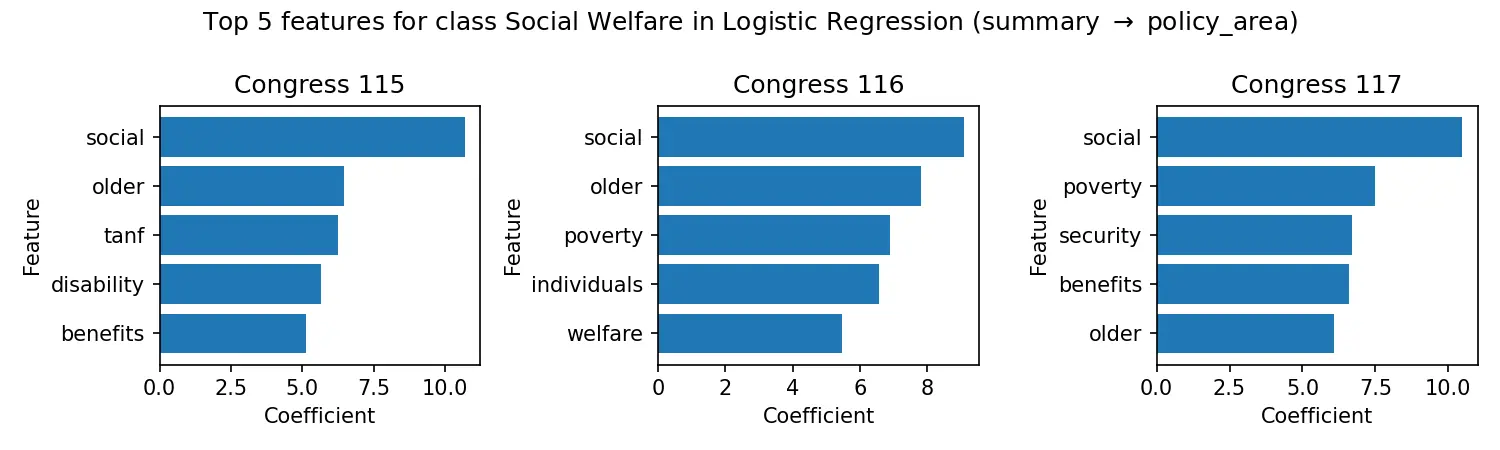
Top features for Social Welfare policy classification showing social, poverty, benefits keywords

Congressional Knowledge Graph & Policy Classification

A computational social science project that engineered a custom extraction engine to build a 47,000+ bill knowledge graph from Congress.gov (115th-117th Congresses), creating a novel legislative graph with co-sponsorship networks and establishing an 87% accuracy benchmark for policy area classification now available on Hugging Face.

Computational Social Science
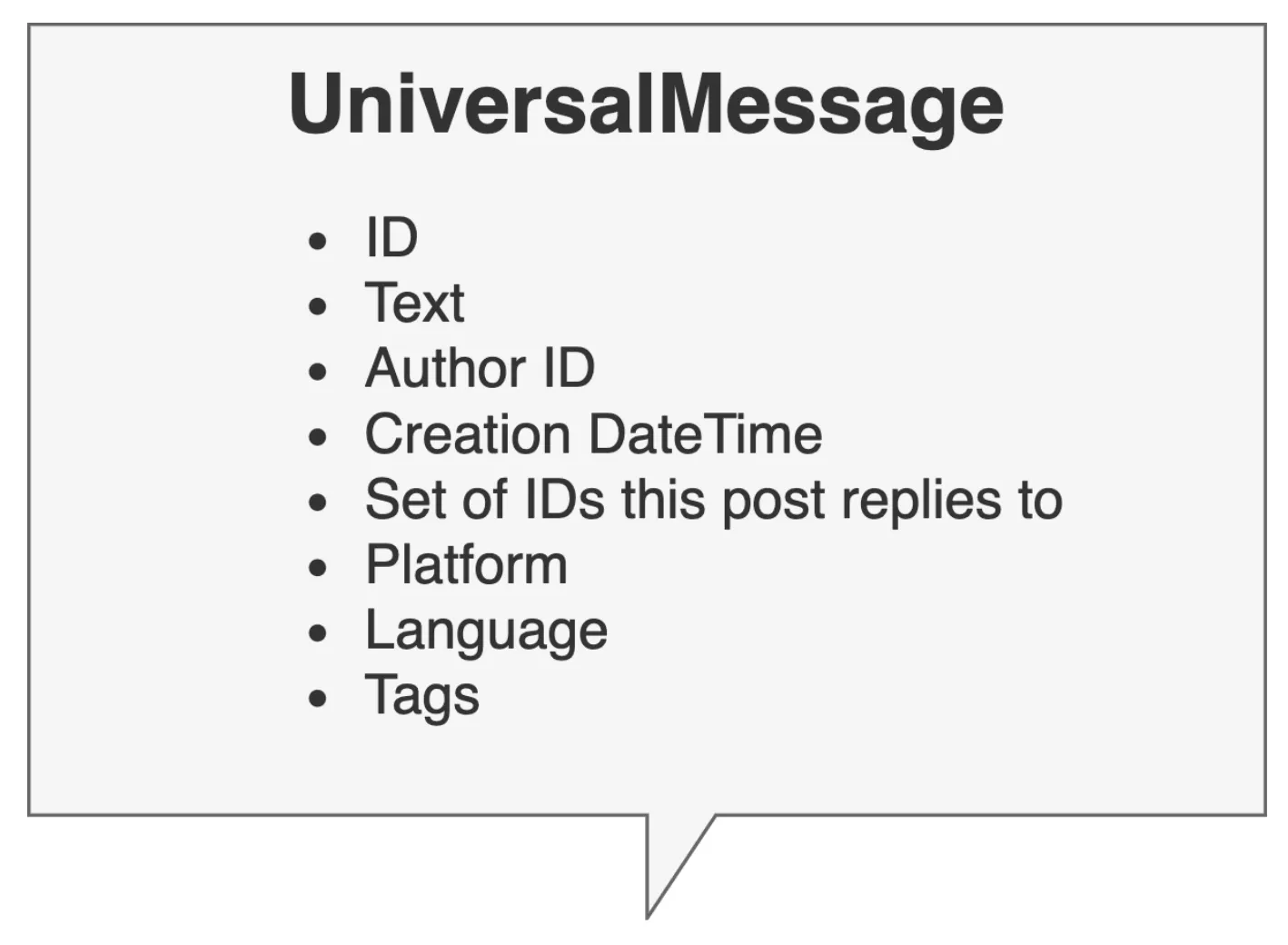
Diagram of the Universal Message schema showing fields like ID, Text, Author, and Reply Sets that normalize data across platforms

Look, Don't Tweet: Unified Data Models for Social NLP

Bachelor’s thesis introducing PyConversations, an open-source library that normalizes over 308 million posts from Twitter, Reddit, Facebook, and 4chan into a unified data model for cross-platform social media research.

Computational Social Science
Diagram of the Universal Message schema showing fields like ID, Text, Author, and Reply Sets that normalize data across platforms

PyConversations: Social Media Conversational Analysis

Research project that investigated how different NLP models perform on social media data, finding that domain-specific approaches often outperform large pre-trained models. Includes PyConversations, a Python module for analyzing conversations across social media platforms.

Computational Social Science
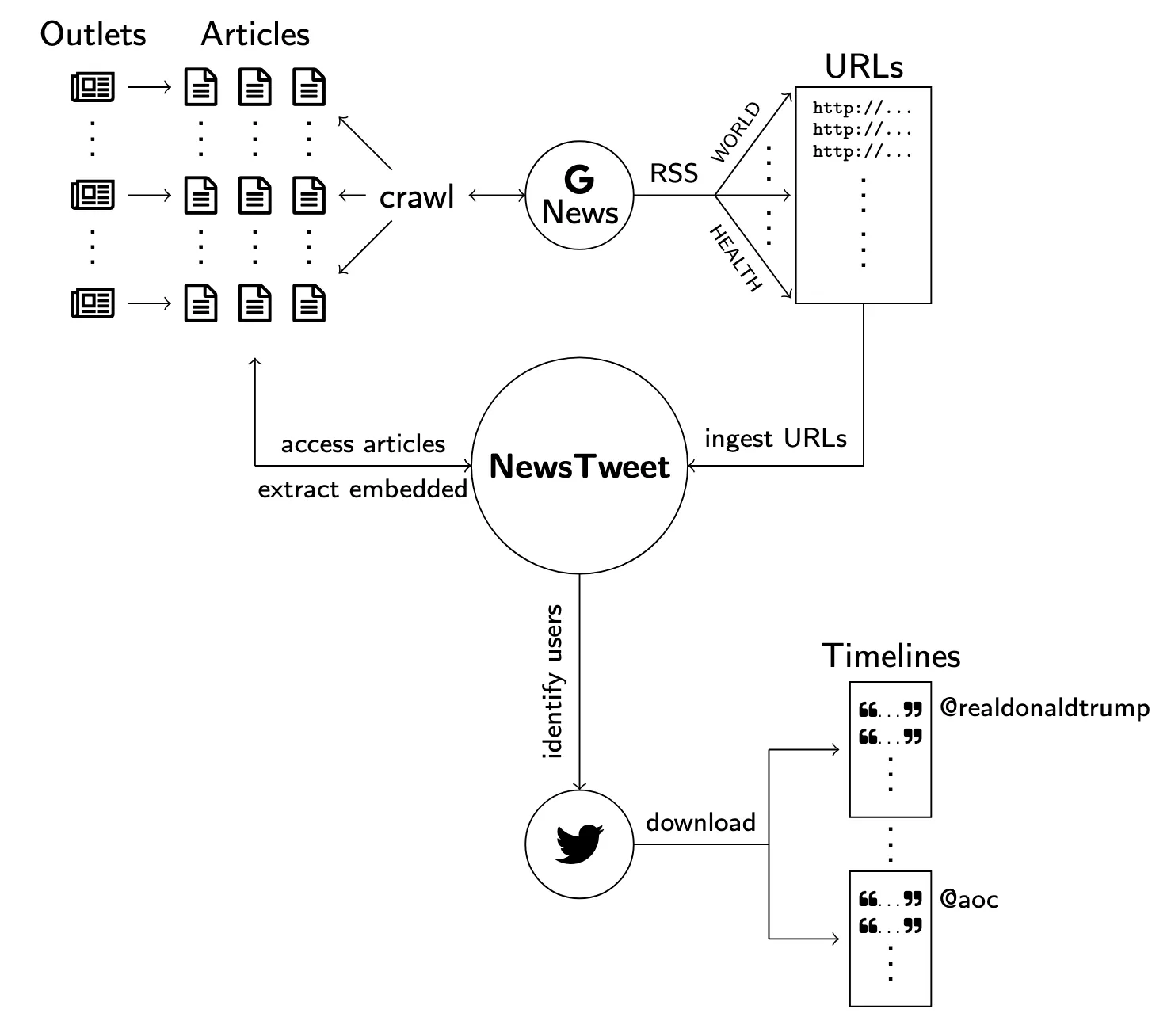
NewsTweet data collection pipeline: news outlets are crawled via Google News RSS feeds, articles are accessed to extract embedded tweets, and user timelines are downloaded from Twitter

NewsTweet Dataset: Social Media in Digital Journalism

We introduce NewsTweet, a dataset and pipeline for studying embedded tweets in digital journalism, revealing that 13% of Google News articles incorporate tweets and providing insights into how social media becomes newsworthy.

Computational Social Science
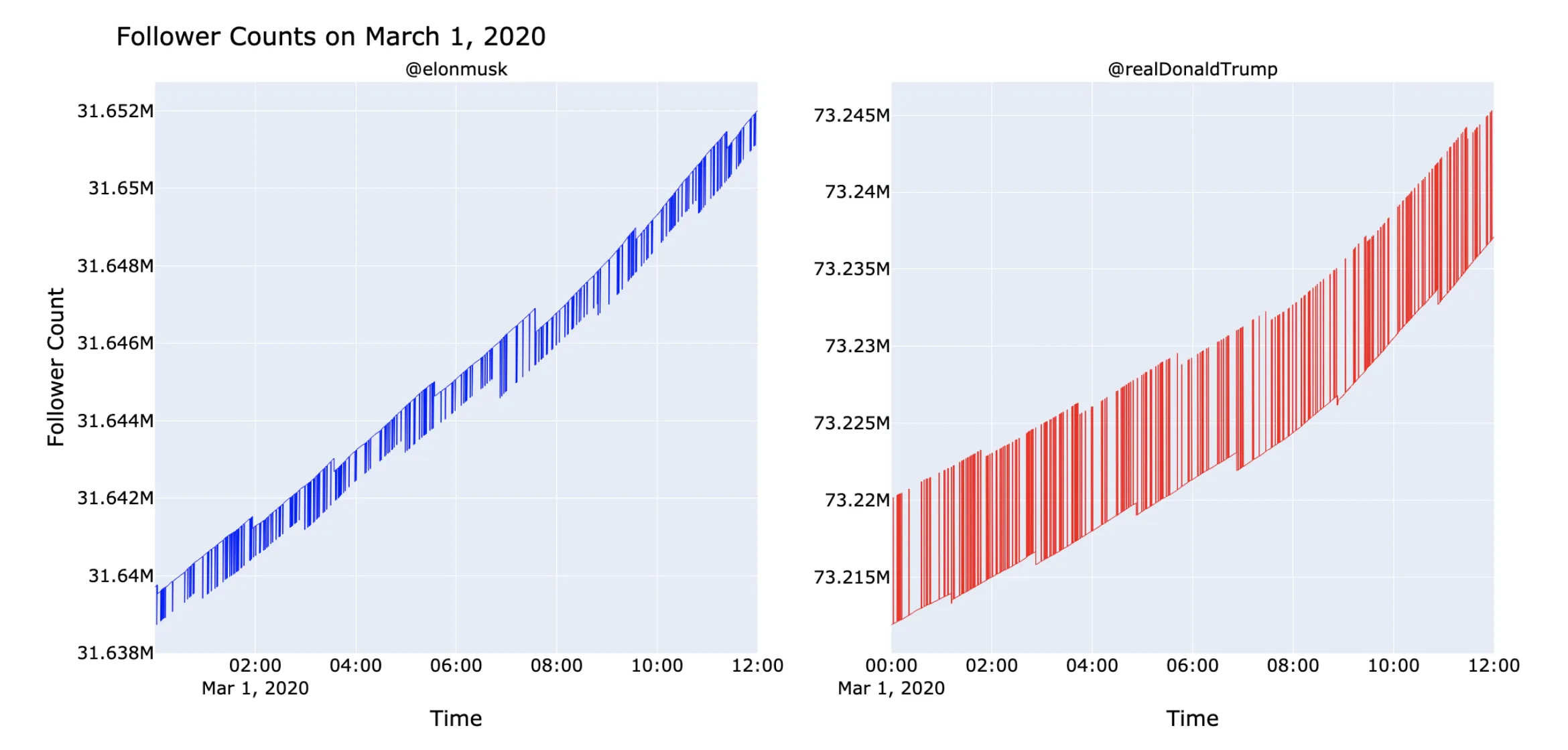
Sawtooth follower growth patterns for @elonmusk and @realDonaldTrump showing coordinated bot activity

Coordinated Social Targeting on Twitter

We developed high-frequency monitoring tools to detect coordinated manipulation on Twitter, documenting anomalous follower patterns including sub-second spikes, sawtooth waves, circulating accounts, and weaponized ancient dormant accounts targeting political figures.